The Inverter Decision You Will Live With for 25 Years: A Clear-Eyed Guide to String, Microinverter, and Hybrid Architectures
Ask most solar buyers what inverter their system uses, and a significant portion will not be able to answer. Ask them why their installer recommended that particular type, and the answer is often a vague reference to cost or reliability. This knowledge gap is understandable—inverters are not glamorous, and the sales conversation tends to gravitate toward panels and financing. But the inverter architecture chosen at installation will shape the performance, flexibility, and maintenance experience of a solar system for the better part of three decades.
At Team Solar Works, we believe that informed clients make better long-term decisions. This guide examines the three primary inverter architectures available to residential and small commercial solar buyers in the United States, with specific attention to the factors that compound over time.
What an Inverter Actually Does
Before comparing architectures, it is worth establishing what an inverter accomplishes. Solar panels produce direct current (DC) electricity. The appliances and systems in your home operate on alternating current (AC). The inverter performs the conversion between these two forms, and it does so continuously, every day, for as long as the system operates.
Beyond conversion, modern inverters handle grid communication, safety disconnection, performance monitoring, and—in hybrid configurations—battery management. The inverter is, in practical terms, the brain of the solar system. Choosing it wisely matters.
String Inverters: The Established Standard
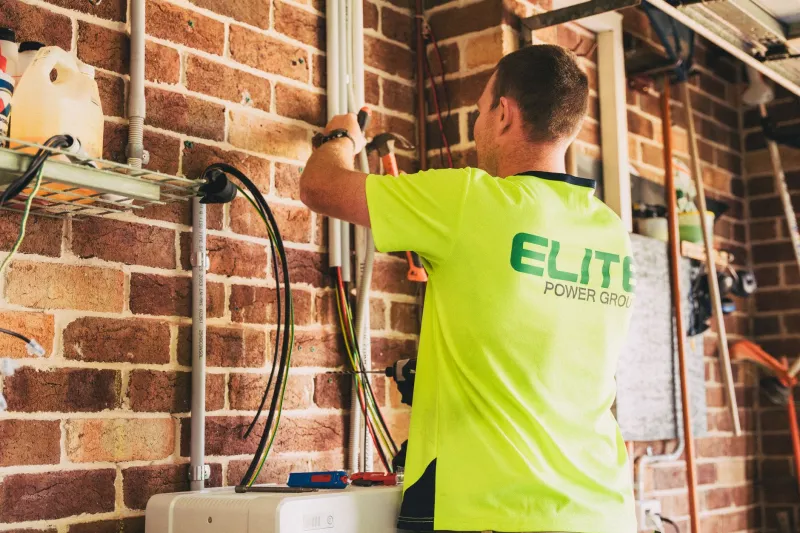
String inverters represent the oldest and most widely deployed inverter architecture in residential solar. In a string configuration, multiple solar panels are wired together in a series circuit—a "string"—and that string connects to a single centralized inverter, typically mounted on an exterior wall near the main electrical panel.
The primary advantage of string inverters is cost. A single centralized unit is less expensive to manufacture and install than distributed alternatives, which translates into lower upfront system cost. String inverters from established manufacturers such as SMA, Fronius, and SolarEdge (with power optimizers) have long track records and are serviced by a broad network of technicians across the country.
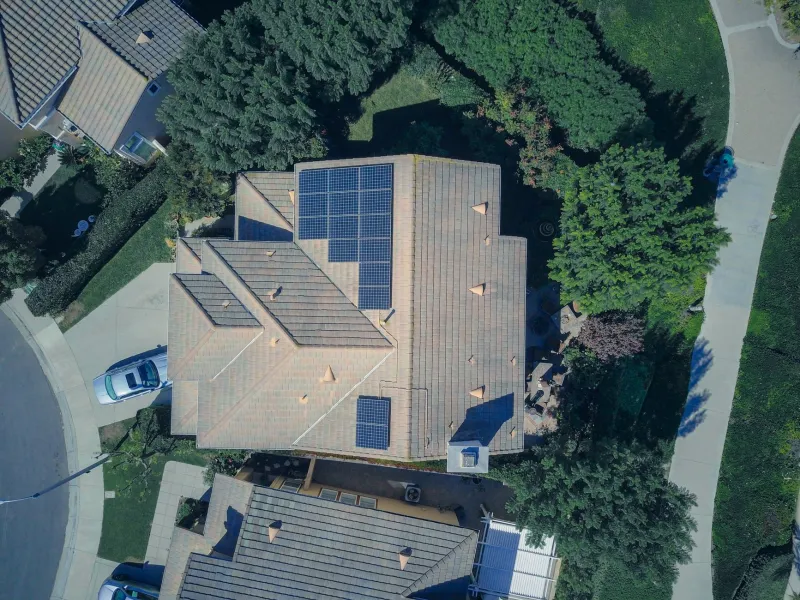
The fundamental limitation of traditional string inverters is their sensitivity to partial shading. Because panels in a string operate as a series circuit, the output of the entire string is constrained by its weakest panel. A single shaded panel—from a chimney shadow, a tree branch, or even debris—can reduce the output of every panel in that string proportionally. In installations with complex roof geometry or nearby obstructions, this characteristic can meaningfully reduce annual energy production.
Power optimizers, which are DC-level devices attached to individual panels before the string inverter, address this limitation partially. They allow each panel to operate at its maximum output point independently, mitigating the series circuit penalty. SolarEdge has built a substantial market position in the United States around this optimizer-plus-string-inverter model. However, optimizers add per-panel hardware cost and introduce an additional component that can fail.
For monitoring, string inverters typically provide system-level data—total production, voltage, and fault alerts. With optimizers, panel-level monitoring becomes available, which significantly improves the ability to identify underperforming panels without a physical inspection.
Microinverters: Distributed Architecture and Its Tradeoffs
Microinverters take the opposite architectural approach. Rather than a single centralized unit, each panel receives its own dedicated inverter mounted directly on the racking beneath it. The AC conversion happens at the panel level, and the system aggregates AC output across all panels.
The most significant operational advantage of microinverters is panel-level independence. Because each panel operates autonomously, shading, soiling, or failure on one panel has no effect on the others. This characteristic makes microinverters particularly well-suited to roofs with complex geometry, multiple orientations, or persistent partial shading conditions.
Panel-level monitoring is native to microinverter systems. Platforms like Enphase's Enlighten provide granular, real-time data on each panel's output, making it straightforward to identify degradation or failure at the individual panel level. For homeowners who value visibility into system performance, this is a genuine operational advantage.
The tradeoffs are meaningful. Microinverter systems carry higher upfront costs due to the quantity of hardware involved. More critically, each microinverter is a potential failure point. A system with 20 panels has 20 inverters, each subject to thermal cycling, moisture exposure, and electrical stress. While leading manufacturers like Enphase offer 25-year warranties on their units, accessing a failed microinverter for replacement requires working on the roof—a more involved process than swapping a ground-level string inverter.
Over a 25-year system lifespan, the statistical probability that at least one microinverter will require replacement is not trivial. Understanding the warranty terms, the manufacturer's financial stability, and the replacement process is essential before committing to this architecture.
Hybrid Inverters: Battery Integration and Future Flexibility
Hybrid inverters—sometimes called multi-mode or storage-ready inverters—add battery management capability to the DC-to-AC conversion function. They are designed to interface with battery storage systems, managing the flow of energy between the solar array, the battery bank, the home's loads, and the grid.
For homeowners who are considering battery storage now or anticipate adding it in the future, a hybrid inverter can simplify that integration significantly. Installing a hybrid inverter at the outset avoids the need to replace or supplement the inverter when storage is added later—a retrofit that can add considerable cost and complexity.
Manufacturers such as SolarEdge, Solax, Growatt, and Sungrow offer hybrid inverter platforms that are compatible with a range of battery chemistries and capacities. The Tesla Powerwall and Enphase IQ Battery systems take a different approach, integrating their own power management electronics, but the principle of unified energy management is consistent.
The limitation of hybrid inverters is primarily cost: they are more expensive than equivalent string inverters, and the additional functionality is wasted if battery storage is never added. For buyers who are confident they will not pursue storage, the premium is difficult to justify.
The 25-Year Compounding Effect
The inverter decision does not merely affect the first year of system operation. It compounds across the entire system lifespan in ways that are worth modeling explicitly.
A string inverter typically carries a 10-to-12-year warranty and has an expected operational lifespan of 10 to 15 years under normal conditions. This means that most residential solar systems will require at least one string inverter replacement during their operational life. That replacement cost—currently ranging from approximately $1,500 to $3,000 installed, depending on system size and inverter model—should be incorporated into any honest long-term financial projection.
Microinverter systems with 25-year warranties offer the theoretical possibility of no replacement during the system's primary lifespan, but warranty coverage and manufacturer longevity are not the same thing. Verifying that a manufacturer has the financial health and operational infrastructure to honor a 25-year warranty is a reasonable due diligence step.
Upgrade flexibility is another long-term consideration. As battery storage technology evolves and time-of-use electricity rates become more prevalent across the United States, the ability to add storage efficiently becomes increasingly valuable. Systems built on hybrid-ready architecture preserve that optionality; those that are not may face higher retrofit costs.
Making the Right Choice for Your Specific Situation
No single inverter architecture is universally superior. The right choice depends on roof configuration, shading conditions, budget, storage intentions, and tolerance for monitoring complexity.
- Simple roof geometry, minimal shading, and budget sensitivity: a quality string inverter with power optimizers offers strong value.
- Complex roof, multiple orientations, or significant shading: microinverters provide meaningful production advantages that may justify the premium.
- Battery storage planned now or likely in the future: a hybrid inverter preserves flexibility and avoids costly retrofits.
At Team Solar Works, our consultation process evaluates each of these factors before recommending an inverter architecture. The goal is not to sell a particular product but to ensure that the hardware decision made at installation continues to serve the homeowner well across the full life of the system.