Solar Panels and Battery Storage: Your Complete 2024 Roadmap to True Energy Independence
For years, residential solar operated under a relatively simple premise: generate electricity during daylight hours, send any surplus back to the grid, and draw from the utility when the sun goes down. Net metering policies made this arrangement financially workable for millions of Americans, and it still functions reasonably well in many states.
But the energy landscape is shifting. Grid reliability events — from the Texas winter storm of 2021 to rolling blackouts across California and hurricane-driven outages along the Gulf Coast — have prompted a fundamental rethinking of how households and businesses should relate to the electrical grid. At the same time, battery storage technology has matured considerably, and installed costs have dropped enough to make solar-plus-storage a realistic option for a broad range of property owners.
This guide is designed to give you a clear, technically grounded understanding of how solar and battery storage work together, what the leading systems look like in 2024, and how to evaluate whether this combination makes sense for your specific situation.
How Solar-Plus-Storage Actually Works
A standalone solar system operates in a straightforward manner: panels convert sunlight into direct current (DC) electricity, an inverter transforms that DC power into the alternating current (AC) your home's circuits use, and any excess generation flows back to the grid. When your panels are not producing — at night or during overcast weather — you draw power from the utility as you normally would.
Adding battery storage changes this dynamic meaningfully. Rather than sending surplus energy to the grid, your system stores it in a battery bank. That stored energy is then available to power your home during evening hours, cloudy days, or grid outages. Depending on your battery capacity, your home's consumption patterns, and your local utility's rate structure, you may be able to operate largely — or even entirely — independently of the grid during certain periods.
Modern solar-plus-storage systems use sophisticated energy management software to optimize how electricity flows among your panels, battery, home loads, and the grid. Some systems allow you to set preferences: prioritize self-consumption, prioritize backup reserve, or automatically shift usage to avoid peak utility rates.
Why Grid Independence Matters More in 2024
The American electrical grid is under increasing stress from multiple directions simultaneously. Extreme weather events are becoming more frequent and more severe. Aging infrastructure in many parts of the country was not designed to handle the demands placed on it by electrification trends — including the rapid adoption of electric vehicles and heat pumps. Utility-scale renewable integration, while broadly positive, introduces variability that grid operators are still learning to manage.
The result is that power outages are occurring more frequently and lasting longer than they did a decade ago, according to data from the U.S. Energy Information Administration. For homeowners and businesses that depend on continuous power — whether for medical equipment, refrigerated inventory, or simply the ability to work from home — this trend has real consequences.
Battery storage addresses this vulnerability directly. A properly sized solar-plus-storage system can keep essential loads running during outages that last hours or even days, without requiring a propane or natural gas generator.
Comparing Leading Battery Technologies in 2024
Not all battery storage systems are created equal. The market has consolidated around a handful of chemistries and manufacturers, each with distinct characteristics.
Lithium Iron Phosphate (LFP)
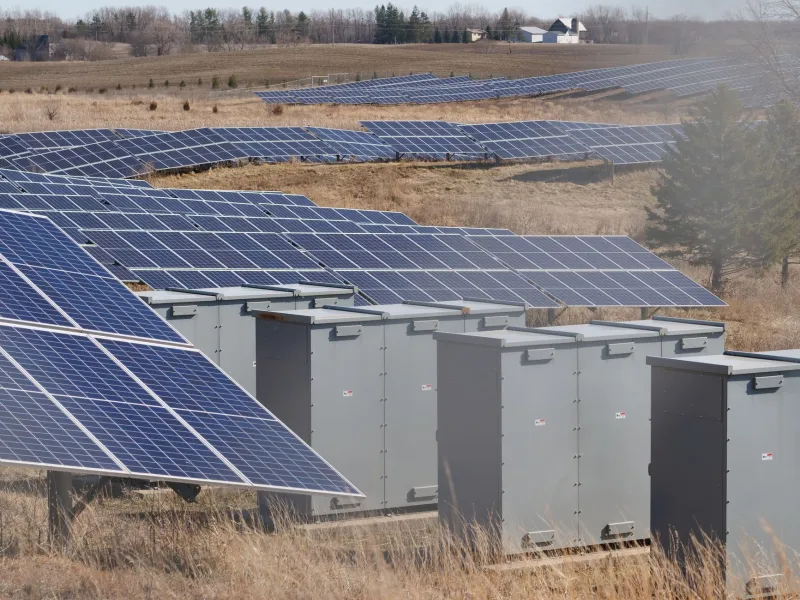
Lithium iron phosphate batteries have emerged as the dominant chemistry for residential and commercial storage applications in the United States. They offer excellent cycle life — often rated for 3,000 to 6,000 full charge-discharge cycles — along with strong thermal stability and a relatively benign safety profile compared to other lithium-ion variants. The Tesla Powerwall 3, the Enphase IQ Battery 5P, and the Franklin Electric aScreen all use LFP chemistry.
Nickel Manganese Cobalt (NMC)
NMC batteries offer higher energy density than LFP, meaning they can store more energy in a smaller physical footprint. This characteristic makes them attractive for space-constrained installations. However, they are generally considered slightly less thermally stable and may have a shorter cycle life under heavy use. Some earlier-generation storage products used NMC chemistry.
Flow Batteries
Flow batteries represent a different architectural approach entirely, storing energy in liquid electrolytes housed in external tanks rather than in solid cells. They are well-suited for large-scale commercial and industrial applications due to their scalability and long cycle life, but they remain relatively uncommon in residential settings due to their size and upfront cost.
For most homeowners and small businesses evaluating solar-plus-storage in 2024, an LFP system from an established manufacturer represents the most balanced combination of performance, longevity, and value.
Sizing Your System: Getting the Numbers Right
Determining how much storage capacity you need requires a clear-eyed assessment of your goals. Are you primarily interested in maximizing self-consumption of your solar generation? Do you want enough backup capacity to run your entire home through a 24-hour outage? Or are you focused on avoiding peak utility rates by discharging your battery during high-cost evening hours?
Each objective leads to a different sizing recommendation. A household that wants to cover essential loads — refrigerator, lighting, phone charging, and a few outlets — during a typical overnight period might be well served by a single 10–13 kWh battery unit. A household seeking to maintain full normal operations through a multi-day outage would require significantly more capacity, likely two or more battery units paired with a solar array sized to recharge them within a reasonable daily window.
At Team Solar Works, our engineers model your historical utility usage, your roof's solar resource, and your stated resilience goals together to arrive at a system configuration that is genuinely appropriate for your circumstances — not simply the largest system we can sell.
The Financial Case: Incentives, Payback, and Rate Structures
The Inflation Reduction Act of 2022 extended and expanded the federal Investment Tax Credit (ITC) for solar installations, and critically, it made standalone battery storage systems eligible for the 30 percent credit as well — provided the battery is charged primarily from solar. This represents a meaningful shift in the economics of storage adoption.
Many states offer additional incentives. California's Self-Generation Incentive Program (SGIP) provides rebates for battery storage installations. Massachusetts, New York, and several other states have their own storage-specific incentive structures. The specifics vary considerably by location and change periodically, so verifying current program availability with a qualified installer is essential.
On the rate side, homeowners in states that have moved toward time-of-use pricing — where electricity costs significantly more during evening peak hours than during midday — often find that battery storage pays for itself more quickly than simple payback calculations suggest. By charging the battery during low-rate periods and discharging during peak hours, you effectively buy electricity cheap and avoid buying it expensive.
Is Solar-Plus-Storage Right for You?
The honest answer is that it depends on your utility rates, your local grid reliability history, your available roof space, your budget, and your risk tolerance. For some property owners, a solar-only system still delivers the best financial return. For others — particularly those in regions with frequent outages, high peak rates, or utilities that have reduced net metering compensation — storage transforms a good investment into an exceptional one.
What is unambiguously true is that the technology has matured, the costs have fallen substantially, and the policy environment has never been more supportive. If you have been curious about energy storage but assumed it was out of reach financially or technically, 2024 is a genuinely worthwhile year to revisit that assumption.
Our team at Team Solar Works is available to walk you through a no-obligation assessment of your property and energy profile. We will give you an honest picture of what solar-plus-storage could deliver for your specific situation — and what it would realistically cost to get there.