Energy Independence Is No Longer a Fantasy: How Solar and Battery Storage Are Redefining Home Power in 2024
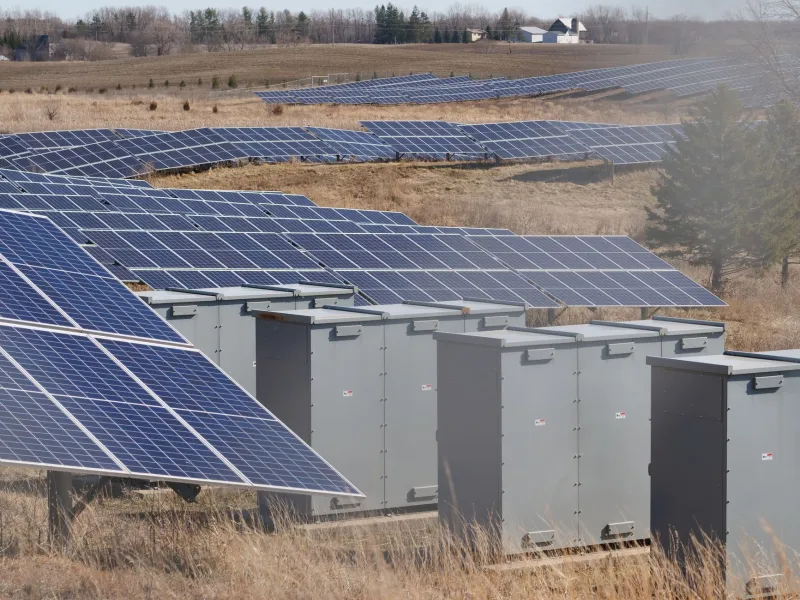
For years, the idea of a home that generates, stores, and manages its own electricity felt like a vision reserved for technology enthusiasts with deep pockets. In 2024, that vision has become an accessible reality for a broad cross-section of American households and commercial property owners. A confluence of technological maturation, declining hardware costs, and federal policy support has pushed solar-plus-battery systems from a niche luxury into a genuinely compelling financial and practical investment.
At Team Solar Works, we have observed this shift firsthand across the residential and commercial projects we manage. The questions our clients ask have changed. Fewer people are asking whether battery storage is worth considering. More are asking which battery system is right for their specific situation.
What Has Changed in Battery Technology
Lithium iron phosphate (LFP) battery chemistry has emerged as the dominant technology in residential energy storage, displacing earlier lithium-ion formulations that carried higher fire risk and shorter cycle lives. LFP batteries now routinely offer 4,000 to 6,000 full charge-discharge cycles with minimal capacity degradation, translating to effective lifespans of 10 to 15 years under typical residential use patterns.
Storage capacity has also expanded. Where early residential battery products offered 10 kilowatt-hours (kWh) of usable storage, today's systems can be stacked or configured to provide 20, 30, or even 50 kWh — sufficient to power an average American home for one to three days without any grid input or solar generation.
The cost trajectory has been equally significant. According to data from the Lawrence Berkeley National Laboratory, the installed cost of residential battery storage has declined by more than 70% over the past decade. Systems that cost $1,500 per kWh in 2014 now commonly install at $900 to $1,100 per kWh, with further reductions expected as manufacturing scale increases.
Federal Incentives: A Critical Accelerant
The Inflation Reduction Act (IRA), signed into law in August 2022, fundamentally altered the economics of battery storage. Prior to the IRA, standalone battery systems — those not paired with solar — were ineligible for the federal Investment Tax Credit (ITC). The updated legislation extended the 30% ITC to battery storage systems regardless of whether they are paired with solar panels, provided they meet domestic content and capacity requirements.
For a homeowner installing a $12,000 battery system, that 30% credit represents $3,600 in direct tax liability reduction. When combined with a solar installation that also qualifies for the 30% ITC, the combined federal incentive can offset a substantial portion of total system cost. Several states — including California, New York, Massachusetts, and Hawaii — layer additional rebates and incentives on top of the federal credit, further improving the financial case.
Commercial property owners benefit from the ITC as well, with the added advantage of accelerated depreciation under the Modified Accelerated Cost Recovery System (MACRS), which can significantly improve the after-tax return on investment.
Real-World Scenarios Where Storage Delivers Measurable Value
The value proposition of battery storage is not uniform — it depends heavily on local utility rate structures, grid reliability, and how a homeowner or business uses electricity. The following scenarios illustrate where storage consistently delivers the greatest financial and practical benefit.
Time-of-Use Rate Optimization: Many utilities across the country now charge higher rates during peak demand hours, typically late afternoon through early evening. A battery system charged by solar panels during midday can discharge during these peak periods, allowing homeowners to avoid the most expensive electricity on the grid. In markets like California, where peak rates can reach $0.45 to $0.55 per kWh, this arbitrage alone can generate meaningful savings.
Grid Outage Protection: Power outages have become more frequent and more prolonged across much of the United States, driven by aging infrastructure, extreme weather events, and increased demand. A solar-plus-battery system configured for backup power can maintain essential loads — refrigeration, medical equipment, lighting, internet connectivity — through outages lasting hours or days. For households in wildfire-prone regions of the West or hurricane-affected areas of the Southeast, this resilience has tangible safety implications.
Whole-Home or Partial-Home Backup: Modern battery systems allow homeowners to designate which circuits receive backup power, enabling a strategic approach to energy management during an outage. A family might choose to back up the refrigerator, a few lights, the Wi-Fi router, and a window air conditioning unit while leaving non-essential loads offline. This selectivity extends the duration of battery coverage considerably.
Business Continuity and Commercial Applications
For commercial operations, the stakes associated with power disruptions are substantially higher than they are for residential users. A restaurant losing refrigeration overnight faces significant food spoilage costs. A medical practice without reliable power cannot serve patients. A manufacturing facility experiencing an unplanned shutdown may incur costs far exceeding the price of a battery system.
Solar-plus-storage configurations designed for commercial facilities can address both operational continuity and demand charge reduction. Demand charges — fees utilities assess based on a business's peak power draw during a billing period — can represent 30% to 50% of a commercial electricity bill. A well-programmed battery system can suppress these peak demand spikes by supplementing grid power during high-consumption moments, reducing the measured peak and lowering the associated charge.
Planning for Off-Grid Readiness
True off-grid operation — complete disconnection from utility infrastructure — remains a specialized scenario most commonly suited to rural properties where grid connection costs are prohibitive. However, a concept gaining traction in 2024 is "off-grid ready" design: systems that are grid-connected under normal conditions but are engineered to operate independently when the grid fails.
This architecture, sometimes referred to as a grid-forming or islanding capability, requires specific inverter technology and careful system design. Not all solar-plus-battery systems offer this functionality out of the box. When evaluating systems, it is important to confirm that the inverter and battery combination supports automatic islanding and that the system has been sized to meet your critical load requirements during an extended outage.
Making the Decision in 2024
The convergence of lower hardware costs, a 30% federal tax credit applicable to both solar and standalone storage, and an increasingly fragile national grid has created a genuinely favorable environment for homeowners and businesses considering this investment. The question is no longer whether the technology is ready. The technology is ready.
The more relevant questions are specific to your situation: What are your utility's rate structures? How frequently does your area experience outages? What loads are most critical to protect? What is your financing capacity?
Team Solar Works provides detailed system design and financial modeling tailored to each client's circumstances. Our goal is not simply to sell hardware — it is to design an energy solution that performs reliably and delivers measurable value for decades to come.