Shading, Strategy, and Solar: How to Maximize Energy Output When Trees Are Part of the Picture
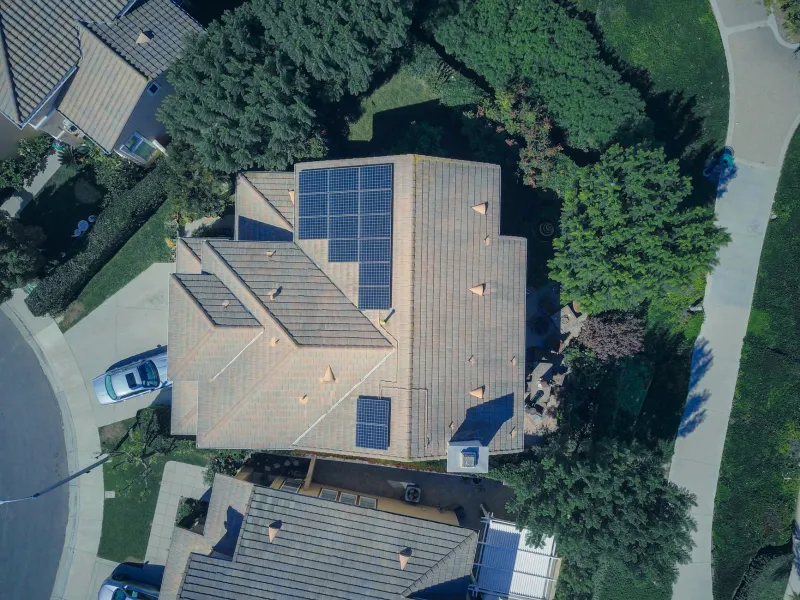
For many homeowners and commercial property managers, the prospect of installing solar panels collides almost immediately with a familiar concern: the property is surrounded by mature trees, and conventional wisdom suggests that shade and solar do not mix. That concern is legitimate—shading is genuinely one of the most significant factors affecting solar system performance. However, it is also one of the most misunderstood, and in many cases, it is far more manageable than property owners initially assume.
The goal of this guide is not to minimize the challenge. Shade is real, and its impact on energy production deserves honest attention. Rather, the goal is to demonstrate that shading challenges can be systematically assessed, strategically addressed, and in many instances, largely overcome—without requiring the removal of trees that provide privacy, curb appeal, or ecological value.
Understanding How Shade Actually Affects Solar Output
To plan effectively around trees, it helps to understand precisely how shade interacts with a solar array. Traditional solar installations wire panels together in series strings, meaning that when one panel's output drops due to shade, the performance of every other panel in that string is pulled down proportionally. This is often described as the "Christmas light effect"—one weak link compromises the entire chain.
This characteristic is what makes even partial, intermittent shading—from a tree canopy that only covers a corner of a rooftop during the morning hours—far more consequential than it might appear on paper. A shadow covering five percent of a roof could, under a conventional string inverter configuration, reduce total system output by a substantially larger margin.
That said, this is not an immutable law of solar physics. It is a function of system design, and system design is something that can be optimized.
Conducting a Proper Shade Assessment
Before any installation decisions are made, a thorough shade assessment is essential. This goes well beyond a contractor standing in the driveway and eyeballing the roofline. Professional shade analysis typically involves one or more of the following methods:
Solar Pathfinder and Suneye Tools: These instruments are placed on the roof itself and used to map the sun's path across the sky throughout the year, identifying precisely when and where obstructions cast shadows. They produce a composite picture of annual shading rather than a single-moment snapshot.
Drone-Based Aerial Surveys: For larger commercial properties or complex residential sites, drone surveys combined with software modeling can generate highly accurate three-dimensional representations of how shadows move across a structure over the course of a day and across seasons.
Software Simulation Platforms: Tools such as Aurora Solar and PVWatts allow installers to input property data, tree locations, and height estimates to model expected energy production under various panel placement scenarios. These platforms can compare the output of different configurations side by side before a single panel is purchased.
The key takeaway is that a quality shade assessment is not optional—it is the foundation upon which an effective installation plan is built. Property owners should request documentation of any shade analysis performed before agreeing to a final system design.
Strategic Panel Placement: Working With the Roof, Not Against It
Once a complete shade map has been developed, the next step is identifying which portions of the roof receive the most consistent, unobstructed sunlight. In many cases, a property with heavy tree cover on the north and west sides may have a south-facing or east-facing roof section that receives excellent solar access. Even a smaller array placed in an optimal location will frequently outperform a larger array that includes panels subject to recurring shade.
For commercial properties with flat or low-slope roofs, panel tilt and orientation can be adjusted more freely, sometimes allowing installers to angle arrays away from nearby obstructions entirely. Ground-mounted systems, where space permits, offer even greater flexibility—panels can be positioned in open areas of the property that are simply not accessible from the roof.
The practical lesson here is that total roof coverage is rarely the right objective. Targeted, high-quality solar access is a more meaningful metric than square footage of panels installed.
Microinverters and Power Optimizers: Technology Designed for Imperfect Conditions
Perhaps the most significant technological development for shaded installations is the widespread adoption of module-level power electronics—specifically microinverters and DC power optimizers. Both approaches address the core problem of string-based shading losses by allowing each panel to operate independently.
Microinverters convert DC electricity to AC current at the panel level, meaning that a shaded panel's underperformance has no effect on its neighbors. Companies such as Enphase Energy have made microinverters a standard option for residential installations across the United States.
DC Power Optimizers, offered by manufacturers including SolarEdge, perform a similar function at the panel level by conditioning the DC output before it reaches a central inverter. The result is comparable: each panel is effectively decoupled from the performance of every other panel in the array.
For properties with unavoidable shading, the additional upfront cost of module-level electronics is frequently recovered through meaningfully higher energy production over the life of the system. An honest installer will model both configurations and present the long-term production and financial comparison transparently.
Real-World Outcomes: Properties That Solved the Shade Problem
The following scenarios reflect the kinds of outcomes that thoughtful planning can produce:
A Suburban Residence in the Mid-Atlantic Region: A homeowner with a heavily wooded lot initially believed solar was not viable. A detailed shade analysis revealed that the south-facing rear portion of the roof was largely unobstructed. A 14-panel microinverter-based system was installed in that zone alone, producing enough electricity to offset approximately 70 percent of the household's annual consumption—without removing a single tree.
A Small Commercial Property in the Southeast: A retail building surrounded by mature oaks on three sides appeared to present a significant challenge. A ground-mounted array was installed in an open parking area adjacent to the building, entirely clear of tree interference. The system has operated at projected output levels since commissioning.
A Residential Property with a Mixed Canopy: A homeowner in the Pacific Northwest had partial shading from a neighboring property's Douglas firs during winter morning hours. Power optimizers were specified for the affected panels, and annual production came within six percent of the unshaded baseline estimate—a result the homeowner considered entirely acceptable given the financial return on the investment.
When Tree Trimming or Removal Does Make Sense
It would be misleading to suggest that trees never need to be addressed. In some cases, selective trimming of lower branches—rather than full removal—can meaningfully improve solar access without significantly altering the tree's health or aesthetic contribution. A certified arborist can assess whether targeted pruning is feasible and sustainable.
In rare situations where a single tree creates overwhelming shading on the only viable roof section, removal may be the most cost-effective path. However, this decision should follow a full analysis of alternatives, not precede it.
Planning for the Long Term
One factor that property owners sometimes overlook is tree growth. A tree that casts minimal shade at the time of installation may become a more significant obstruction over a ten- or twenty-year system lifespan. Factoring projected canopy growth into the initial shade model is a reasonable precaution, and it is worth asking any installer how they account for this variable in their production estimates.
A Solvable Challenge
Shading is among the most common reasons property owners delay or abandon solar projects. In many cases, that hesitation is based on an incomplete understanding of what modern installation planning and inverter technology can accomplish. The combination of rigorous site assessment, strategic panel placement, and module-level electronics has made it possible for a wide range of properties—including those with substantial tree cover—to generate meaningful, economically viable solar energy.
The first step is always an honest, detailed evaluation of the site. From there, the options are typically broader than most property owners expect.