Five Questions That Separate True Energy Independence From Grid-Tied Practicality
The phrase "off-grid" carries romantic weight: self-reliance, freedom from utility bills, immunity to outages. The engineering reality is more demanding. An off-grid residence is, functionally, a small independent utility, and the homeowner becomes its operator. Most American households that believe they want independence actually want resilience — a narrower and far cheaper goal. Five questions sort the difference.
1. What Must Keep Running When the Power Fails?
Define your critical load, honestly. A refrigerator, well pump, furnace blower, some lighting, and internet equipment might total 2 to 4 kilowatt-hours per day. Whole-home operation — air conditioning in a humid Southern summer, an electric range, an EV charger — can demand 30 kWh or more daily, plus surge capacity for motor starts.
A grid-tied system with battery backup sized to critical loads costs a fraction of an off-grid plant sized for total consumption. If your outage wish list is short, the grid connection is doing quiet, valuable work for you.
2. How Many Days of Autonomy Can You Afford?
Off-grid design is governed by the longest stretch of poor production you're willing to ride out. In much of the continental US, planning for three days of cloudy weather is standard; Pacific Northwest winters can demand far more. Battery storage at current prices runs roughly $800 to $1,200 per installed kilowatt-hour, so autonomy is purchased, not assumed.
Grid-tied owners buy autonomy by the day. Off-grid owners buy it in bulk, upfront, forever.
3. What Does the Utility Charge You to Stay Connected?
Where retail electricity is inexpensive — parts of the Midwest and Southeast — the financial case for leaving the grid is weak, because the savings you're forgoing are small. Where rates are high and net metering is generous, staying connected while exporting power is often more profitable than storing it. Pull twelve months of bills and calculate your effective rate before romanticizing disconnection.
4. Who Maintains the System When You're the Utility?
Off-grid living involves active management: monitoring state of charge, adjusting consumption seasonally, maintaining a backup generator, and eventually replacing batteries — typically every 10 to 15 years for lithium chemistry. Grid-tied owners interact with their systems mostly through an app. If the phrase "load management on a rainy January week" sounds like a hobby rather than a burden, off-grid may genuinely suit you. If it sounds like a chore, it will be.
5. What Is Your Real Risk Tolerance?
Grid-tied homes with battery backup fail only if the grid and the batteries fail together — rare, and recoverable. Off-grid homes have no fallback except the generator and the owner's preparation. Rural homesteaders far from utility lines, for whom interconnection itself costs tens of thousands of dollars in line extension fees, are the classic genuine off-grid candidate. Suburban homeowners two blocks from a distribution transformer usually are not.
Matching the Architecture to the Answer
Three scenarios illustrate where each design lands:
The suburban professional in Texas with frequent grid outages but cheap daytime power: grid-tied with 13–20 kWh of battery storage. Resilience where it counts, export income where rates allow.
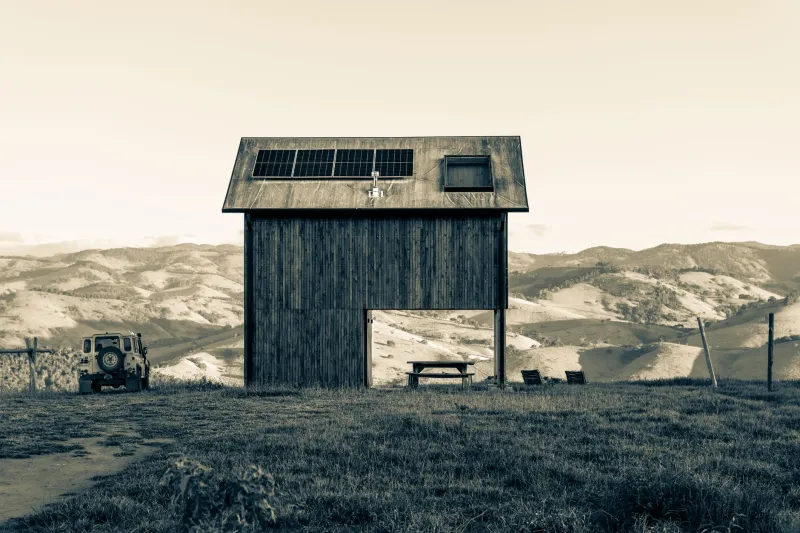
The mountain homestead 1.5 miles from the nearest pole: off-grid with oversized array, substantial storage, and a propane generator. The line-extension quote made the decision before the solar math did.
The coastal family in California facing high rates and wildfire-related shutoffs: grid-tied with batteries, sized to ride out multi-day Public Safety Power Shutoffs while net metering handles the rest.
The pattern is consistent: independence is a tool, not a status. Choose the smallest system that answers your actual risks, and let the grid — where it exists and where it's cheap to keep — do the heavy lifting it was built for.