Fuel Lines vs. Flip of a Switch: How Solar Storage Redefines the Extended Outage
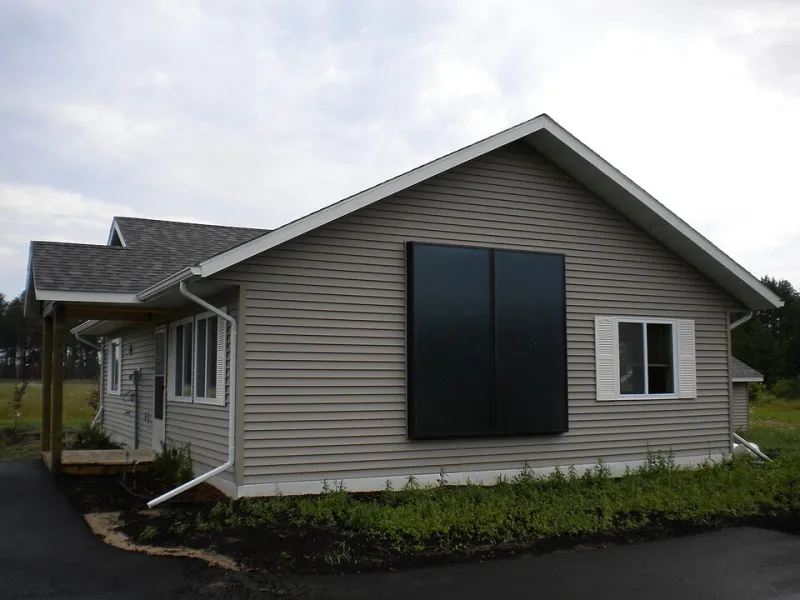
Photo: Own work, Public domain, via Wikimedia Commons
The First Twelve Hours Tell You Everything
When a major storm knocks out power across a neighborhood, the first night usually feels the same in every house. Candles come out. Phones get charged in cars. Nobody knows yet whether the outage will last four hours or four days.
The divergence begins on the second day. In the home with a gas generator, someone makes a pre-dawn run to the hardware store, hoping the shelves still hold fuel. Extension cords snake through windows. The generator runs in four-hour stretches because nobody wants to burn through a five-gallon can before resupply is possible. In the home with solar panels and battery storage, the refrigerator hums, the Wi-Fi router stays live, and the morning routine proceeds with only modest adjustments.
This is not a hypothetical contrast. After Hurricane Ian in 2022 and the Texas winter storm Uri in 2021, extended outages exposed exactly this divide — households dependent on fuel delivery chains versus households generating and storing their own electricity.
The Generator's Hidden Supply Chain Problem
Generators are proven machines, and for many homeowners they remain a reasonable choice. But their fundamental dependency deserves honest scrutiny: a generator is only as reliable as the fuel supply behind it.
During regional disasters, that supply chain is the first thing to strain. Gas stations lose grid power themselves and cannot pump. Roads may be blocked. When fuel is found, lines stretch for hours and rationing is common. A generator that consumes a half-gallon per hour at moderate load will demand roughly 36 gallons across a 72-hour outage — a logistics problem disguised as an equipment purchase.
Add the operational realities: generators cannot run indoors or in attached garages due to carbon monoxide risk, they produce 60 to 70 decibels of continuous noise (loud enough to be heard across the street at midnight), and they require regular oil changes, spark plug checks, and exercise runs to stay dependable. Most residential generators sit idle for years between outages, and a meaningful share fail to start precisely when needed.
What Solar Plus Storage Does Differently
A battery-backed solar system operates on an entirely different logic. There is no fuel to source, no exhaust to vent, and no noise beyond a faint electronic hum. During daylight hours, the solar array recharges the battery even as it powers the home — effectively converting sunlight into an ongoing resupply line that no gas station queue can match.
A typical home battery stores 10 to 13.5 kilowatt-hours of usable energy. That is not enough to run an entire household at full consumption for three days, and no honest installer will claim otherwise. But paired with daytime solar recharge, it can indefinitely sustain a carefully chosen set of critical loads: refrigeration, lighting, internet, medical devices, phone charging, and a well pump or furnace fan.
This is the crucial distinction. A generator attempts to replace the grid wholesale. A solar-plus-storage system replaces the grid selectively, prioritizing what actually matters and shedding what does not.
Sizing Backup Around Critical Loads, Not Total Loads
The most common sizing mistake is designing backup for the whole house. A more durable approach starts with an audit of essential loads:
- Refrigerator and freezer: 1–2 kWh per day combined
- Lighting (LED, key rooms): under 1 kWh per day
- Internet, router, phones, laptops: 0.5–1 kWh per day
- Furnace fan or well pump: 2–5 kWh per day depending on use
- Medical equipment: varies; treat as non-negotiable
A household running this lean load profile needs roughly 5–8 kWh per day — well within the reach of a single battery plus modest solar input, even in winter conditions. Whole-home backup, by contrast, may require two or three batteries and a significant budget increase, largely to support air conditioning and electric resistance loads that could instead be managed with load shedding or temporary adaptation.
A hybrid control system or smart electrical panel can automate this prioritization, dropping discretionary circuits when the battery falls below a set threshold and restoring them when the sun returns.
A Decision Framework for the 72-Hour Question
Before choosing between generator and storage, answer three questions honestly.
First, what outages do you actually face? Frequent, short blips favor simple automatic transfer switches; rare but long outages in hurricane or wildfire territory favor solar-plus-storage, where fuel resupply cannot be counted on.
Second, what must stay on? If the answer is a sump pump, a refrigerator, and a CPAP machine, a right-sized battery is often the cleaner and quieter answer. If the answer includes central air conditioning through a southern summer, the calculus shifts toward larger storage, a standby generator, or both.
Third, what do you want the investment doing on the 364 days without an outage? A generator is pure insurance — it produces nothing between emergencies. A solar battery reduces peak-hour utility bills daily, participates in time-of-use arbitrage, and in some utility programs earns credit for discharging during grid stress events. The same capital either idles or works year-round.
The Realistic Bottom Line
Neither technology is a gadget; both are legitimate resilience strategies. But for households already considering solar, adding storage converts an outage liability into a system that earns its keep every single day — and on day three of a blackout, when the fuel line stretches around the block, that difference stops being financial and becomes profoundly practical.