The Long Game: A Realistic Timeline for What Breaks, Degrades, and Demands Replacement in a Solar System Over 30 Years
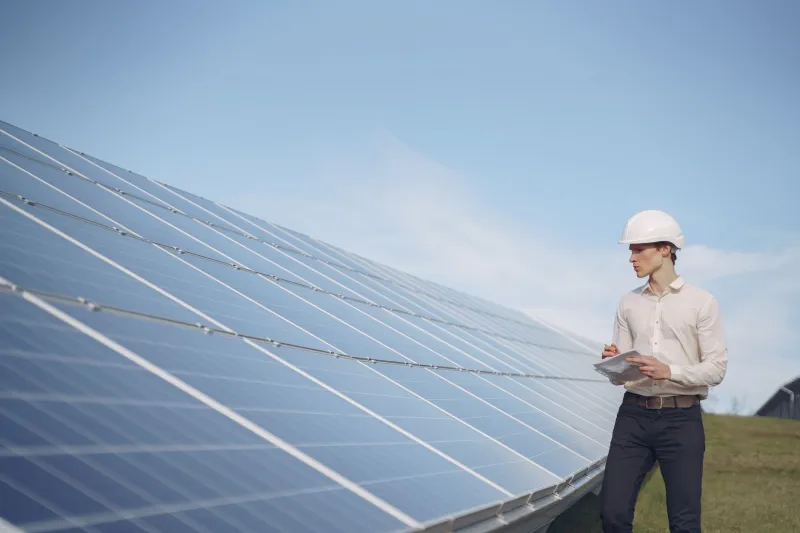
The 25-year performance warranty has become one of the most effective marketing tools in the residential solar industry. It implies longevity, reliability, and a return on investment that extends well into the future. What it does not imply—and what the sales conversation rarely addresses directly—is that a solar installation is not a single product with a single lifespan. It is a collection of components, each operating on its own degradation curve, each with its own failure modes, and each carrying its own replacement cost.
For homeowners making a 25-to-30-year financial commitment, the distinction matters considerably. At Team Solar Works, we believe that honest long-term planning requires a clear-eyed look at what a solar system actually looks like after a decade, two decades, and three decades of continuous operation.
The Panel: Durable, But Not Static
Photovoltaic panels are, by a significant margin, the most durable component in a residential solar system. The underlying technology—silicon cells encapsulated in tempered glass and polymer backsheet—has demonstrated remarkable longevity in field deployments dating back to the 1980s and 1990s. Panels from that era are still producing electricity today, albeit at reduced output.
The operative word is reduced. Solar panels degrade. The degradation is gradual, measurable, and largely predictable, but it is real and it accumulates over time.
The industry standard for panel degradation is approximately 0.5% per year for premium monocrystalline panels, though some manufacturers now warrant degradation rates as low as 0.25% to 0.3% annually. At 0.5% per year, a panel that produces 400 watts at installation will produce approximately 390 watts after five years, 380 watts after ten years, and roughly 350 watts after 25 years. The performance warranty—typically guaranteeing 80% to 82% of rated output at year 25—reflects this trajectory.
What causes degradation? Several mechanisms operate simultaneously. Light-induced degradation (LID) occurs during the first hours and days of exposure to sunlight and accounts for a modest initial output reduction. Potential-induced degradation (PID) can occur in certain system configurations due to voltage stress between the panel and its mounting frame. Thermal cycling—the daily expansion and contraction of materials across temperature differentials—gradually stresses solder joints and cell interconnects. UV exposure degrades polymer components over time.
For most homeowners, panel degradation is a background financial consideration rather than an acute problem. The panels will almost certainly outlast the roof beneath them, the inverter that converts their output, and in many cases the original installer's business. Physical panel failure—cracked glass, delamination, burn marks from hotspots—does occur but is relatively uncommon in quality products from established manufacturers.
The Inverter: The Component Most Likely to Require Replacement
If panels are the marathon runners of a solar system, inverters are the sprinters. They work harder, run hotter, and wear out faster.
A string inverter operates continuously during daylight hours, processing the full DC output of the array, managing grid communication, and handling the thermal demands of high-power electronics. Most string inverters carry warranties of 10 to 12 years, with extended warranties available for purchase. Their expected operational lifespan under typical conditions ranges from 10 to 15 years.
This means that a homeowner who installs a solar system today should plan for at least one string inverter replacement before the panels approach the end of their useful life. The cost of that replacement—including equipment and labor—currently ranges from approximately $1,500 to $3,500 for residential systems, depending on inverter size and model. Factoring this cost into a long-term financial projection is not pessimism; it is accuracy.
Microinverter systems carry 25-year manufacturer warranties, which aligns their coverage period with the panels. In practice, some microinverters will fail before their warranty expires, and the process of identifying and replacing a failed unit involves roof access. The warranty covers the hardware cost; the labor cost of replacement is a separate consideration.
Hybrid inverters, which add battery management capability to standard conversion functions, operate under similar constraints. Their additional complexity may introduce additional failure modes, though the technology has matured considerably in recent years.
Racking and Mounting Hardware: The Quiet Degradation
The aluminum and stainless steel hardware that secures panels to a roof receives almost no attention in the typical solar sales conversation. This is understandable—racking is not glamorous, and high-quality mounting systems from reputable manufacturers are genuinely durable. But the hardware is not immune to the effects of time and environment.
Roof penetrations—the points at which mounting hardware passes through the roof surface—are sealed with flashing and sealant at installation. These seals degrade over time, particularly in climates with extreme temperature variation, high UV exposure, or persistent moisture. A roof penetration that develops a leak ten or fifteen years after installation can cause water damage that dwarfs the cost of the solar system itself.
Regular inspection of roof penetrations and sealant condition is a maintenance task that most solar system owners never perform and few installers explicitly recommend. It is, nonetheless, a genuine long-term maintenance requirement.
In coastal environments, salt air accelerates corrosion on metal hardware components. Installers working in these areas should use marine-grade materials, but verifying that specification at installation—rather than discovering corrosion a decade later—is the homeowner's responsibility.
Wiring, Connectors, and Electrical Components
The DC wiring that connects panels to the inverter uses MC4 connectors—a standardized format that has become the industry default. These connectors are rated for outdoor exposure and long operational life, but they are not infallible. Improperly seated connectors, connectors exposed to persistent moisture, and connectors that have experienced repeated thermal cycling can develop resistance, which reduces output and, in extreme cases, creates a fire hazard.
Annual infrared thermography inspections—in which a thermal imaging camera identifies hotspots in the electrical system—can detect connector problems before they become serious. This service is available from qualified solar maintenance providers and represents a modest annual cost relative to the protection it provides.
AC disconnect switches, combiner boxes, and the conduit system connecting the array to the main panel are generally robust but should be included in periodic inspection routines. Rodent damage to conduit and wiring is more common than many homeowners expect, particularly in rural settings.
Battery Storage: The Shortest Cycle in the System
For homeowners who have added battery storage, the degradation timeline introduces an additional variable. Lithium iron phosphate (LFP) batteries—now the dominant chemistry in residential storage products—are warranted for 10 years at specified minimum capacity, with many manufacturers guaranteeing 70% to 80% of original capacity at warranty end.
In practice, battery degradation depends heavily on usage patterns. Systems that cycle deeply every day will degrade faster than those used primarily for backup. Temperature management is also significant: batteries stored in unconditioned spaces in climates with extreme heat will degrade more rapidly than those in temperature-controlled environments.
Plan for battery replacement at the 10-to-15-year mark. Current replacement costs for residential battery systems range from approximately $8,000 to $15,000 installed, depending on capacity. That cost will likely decrease as the technology matures, but it should be incorporated into any long-term financial model.
Building a Realistic 30-Year Financial Model
A complete long-term financial projection for a solar installation should include:
- Annual production decline based on documented panel degradation rates
- At least one inverter replacement, budgeted at current costs with a modest inflation adjustment
- Battery replacement if storage is part of the system, timed to the warranty period
- Periodic maintenance costs for inspection, cleaning, and minor repairs
- Roof condition assessment, since panels may need to be removed and reinstalled if the roof requires replacement during the system's lifespan
None of these costs eliminate the financial case for solar. In most US markets, even with realistic component replacement budgets, solar installations generate compelling long-term returns. But the case is stronger—and the planning is more reliable—when it is built on accurate assumptions rather than optimistic ones.
At Team Solar Works, we provide clients with full-lifecycle cost projections that incorporate these variables from the outset. The goal is not to discourage investment in solar energy but to ensure that the investment is made with complete information. Systems that are properly maintained and planned for realistically tend to outperform their projections. Systems that are installed and forgotten tend to underperform them.