Commercial Solar Economics: Why Business Installations Require an Entirely Different Financial Playbook
A business owner who recently had solar installed on their home naturally begins evaluating a commercial installation through a familiar lens: calculate the system cost, estimate the utility savings, divide one by the other, and arrive at a payback period. It is an understandable approach, and it is almost always wrong when applied to a commercial context.
Commercial solar economics operate under a fundamentally different set of rules. The variables that determine return on investment for a business—demand charges, depreciation schedules, tax incentive structures, load profiles, and utility tariff classifications—have no meaningful equivalent in the residential world. Applying residential logic to a commercial project does not produce a conservative estimate; it produces an inaccurate one that can distort capital allocation decisions in either direction.
Demand Charges: The Cost Driver Most Business Owners Underestimate
Residential electricity customers pay almost exclusively for the volume of electricity they consume, measured in kilowatt-hours. Commercial and industrial customers typically pay for volume and peak demand—the highest rate of power draw recorded during any fifteen-minute interval in a billing period, measured in kilowatts.
Demand charges can constitute 30% to 70% of a commercial utility bill, depending on the utility, rate class, and the business's operational profile. A manufacturing facility, a large retail space, or a medical office with high-draw HVAC equipment may find that reducing kilowatt-hour consumption through solar has a proportionally smaller impact on total utility costs than expected—unless the solar system is specifically designed to shave peak demand, often in conjunction with battery storage.
A residential solar calculator that simply divides annual kilowatt-hour consumption by system output will miss this dimension entirely. A proper commercial solar analysis models the facility's load profile hour by hour, identifies when peak demand events occur, and determines how a solar array—potentially paired with storage—can reduce both energy and demand charges simultaneously.
Tax Incentives That Simply Do Not Exist in the Residential World
Both residential and commercial solar installations qualify for the federal Investment Tax Credit (ITC), currently set at 30% under the Inflation Reduction Act. However, the commercial tax environment offers additional tools that dramatically improve project economics for businesses.
The most significant is the Modified Accelerated Cost Recovery System (MACRS), which allows commercial solar installations to be depreciated over five years for federal tax purposes. Combined with bonus depreciation provisions—which have allowed businesses to deduct a substantial percentage of asset cost in the year of installation—MACRS can effectively reduce the net cost of a commercial solar system by an additional 20% to 25% beyond the ITC alone, depending on the business's tax situation and applicable bonus depreciation rates in the year of installation.
Residential customers receive no equivalent depreciation benefit. A business owner who evaluates commercial solar without accounting for MACRS is comparing a fundamentally different financial instrument to their home system experience. Engaging a tax professional alongside a solar consultant is not optional in commercial project planning—it is a prerequisite for accurate financial modeling.
Roof Complexity and Structural Considerations at Commercial Scale
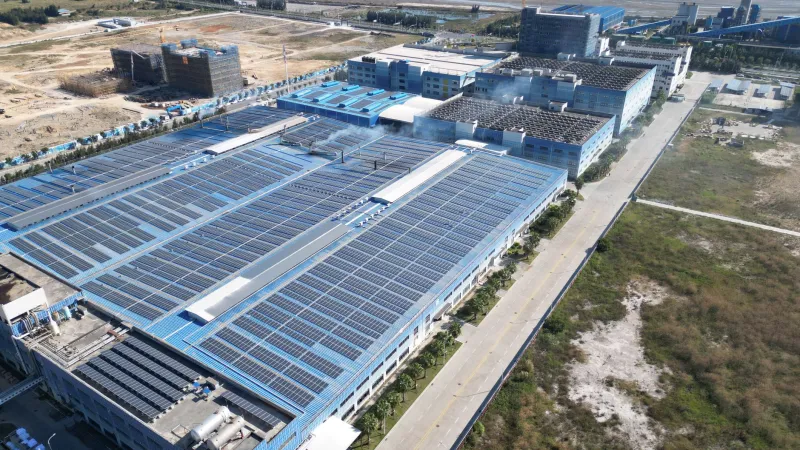
Residential roofs are relatively standardized. A typical asphalt shingle or metal roof on a single-family home presents a manageable installation environment. Commercial rooftops introduce a different category of complexity: flat membrane roofs requiring ballasted or penetrating racking systems, HVAC equipment competing for usable space, structural load limits that must be verified by a licensed engineer, and parapet walls that create shading patterns requiring careful modeling.
These factors affect both installation cost and long-term system performance. A commercial project that does not begin with a thorough structural assessment and a detailed shading analysis risks either underperforming its projections or requiring expensive remediation after installation. The due diligence phase of a commercial solar project is substantially more involved than its residential counterpart, and the associated engineering and permitting costs must be incorporated into the financial model from the outset.
Scalability and Phased Deployment Strategies
Businesses grow, energy demands shift, and operational priorities evolve. A commercial solar installation designed exclusively for current consumption without consideration of future load growth may require costly system expansion or upgrades within five to ten years. Conversely, an oversized system installed to accommodate projected growth that does not materialize may generate excess electricity that cannot be effectively monetized under the facility's utility tariff.
Phased deployment—installing a system sized for current needs with electrical infrastructure designed to accommodate future expansion—is a strategy with no residential equivalent. It requires coordination between the solar contractor, the utility, and the business's operational planning team. For multi-site businesses, a portfolio approach that prioritizes installations at facilities with the most favorable economics can further optimize capital deployment.
Financing Structures and Their Impact on Business Cash Flow
Commercial solar financing options include direct purchase, commercial loans, solar leases, power purchase agreements (PPAs), and sale-leaseback arrangements. Each structure affects the business's balance sheet, tax position, and cash flow differently. A PPA, for example, allows a business to access solar electricity at a contracted rate without a capital expenditure, but it also transfers the tax benefits to the financing entity—which may or may not be the optimal outcome depending on the business's tax appetite.
A direct purchase maximizes long-term savings and tax benefits but requires upfront capital or debt service. The correct financing structure depends on the business's cost of capital, tax liability, balance sheet priorities, and operational horizon. These are not considerations that a residential solar calculator or a general-purpose online estimator is equipped to evaluate.
Building a Commercial Solar Analysis That Reflects Reality
An accurate commercial solar financial model incorporates: current and projected utility bills broken down by energy and demand components, a system design validated by professional solar modeling software, federal and applicable state tax incentives including MACRS depreciation, financing structure and its effect on net present value, structural and engineering costs, interconnection and permitting timelines, and projected utility rate escalation over the system's operating life.
Businesses that approach commercial solar with this level of analytical rigor consistently arrive at more accurate payback projections and more defensible capital investment decisions. Those that apply residential shortcuts to commercial decisions frequently find that the actual economics—whether better or worse than anticipated—differ substantially from initial expectations.
Commercial solar is a genuinely compelling investment for many American businesses. Realizing its full potential requires treating it as the distinct financial undertaking it is.